
581. How a small Chicago nonprofit is resisting Trump's war on DEI
Andrea Hsu discusses how Chicago Women in Trades is combating the challenges posed by Trump's initiatives against diversity, equity, and inclusion efforts.
your daily dose of economic commentary
Andrea Hsu discusses how Chicago Women in Trades is combating the challenges posed by Trump's initiatives against diversity, equity, and inclusion efforts.
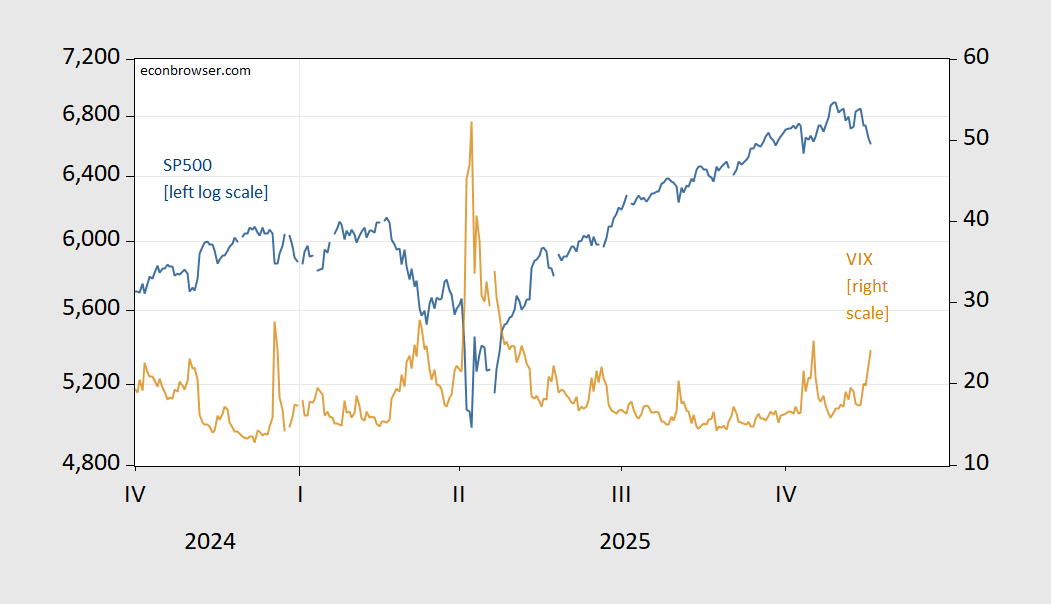
An argument that the S&P500 and Bitcoin have both experienced significant declines from their peaks, with accompanying data visualizations.
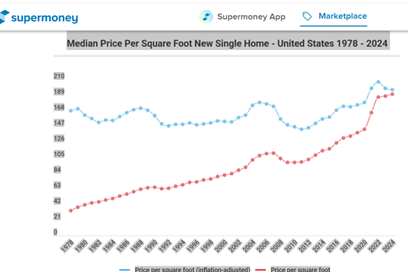
Menzie Chinn addresses comments on house price affordability, analyzing data trends and responding to critiques regarding normalization dates and price changes over time.

An argument that Trump's approval ratings are influenced by economic concerns and political events, suggesting his hold on the GOP may be weakening amid recent challenges.

Timothy Taylor discusses the increase in US tariff revenues, their impact on GDP, and the implications for consumers and economic growth.

Container traffic data reveals significant declines in imports and exports at LA ports, indicating ongoing trends in trade activity and seasonal patterns affecting the economy.

The post highlights various stories related to economic principles, including food prices, tariffs, transportation trends, and the decline of penny circulation.

John Ruwitch discusses a federal judge's ruling that favors Meta in an antitrust case, rejecting the FTC's attempt to spin off WhatsApp and Instagram.

L. Carol Ritchie reflects on the significance of the penny in national and international discussions, highlighting its cultural and historical impact.
Alex Tabarrok discusses the implications of tariffs, particularly how wealthy nations' policies can negatively influence poorer countries and the complexities of economic arguments surrounding tariffs.

Clifford A. Bates Jr. discusses the importance of cooperation and reciprocity in politics, drawing on insights from Robert Axelrod and others to illustrate their relevance.

Builder confidence in the housing market slightly improved in November, yet remains low due to economic uncertainties and a challenging sales environment for new homes.

An argument that housing issues significantly impact economic inequality and generational wealth transfer, affecting young people's ability to achieve homeownership and economic stability.

Greg Rosalsky discusses the implications and viability of a 50-year mortgage compared to a traditional 30-year mortgage.

Mandalit del Barco discusses the concerns of theater owners regarding the potential sale of Warner Bros. Discovery and its implications for the film industry.

An argument that housing affordability concerns stem from generational expectations rather than actual economic conditions, highlighting historical data on home prices and mortgage rates.
Timothy Taylor discusses the impact of dishwashers on household labor and gender roles, highlighting technological advancements that save time and change dynamics in family responsibilities.
Tyler Cowen discusses John Cochrane's insights on housing supply, emphasizing inefficiencies and regulatory barriers affecting mobility and availability in the market.

David Folkenflik discusses the Corporation for Public Broadcasting's decision to revive a contract with NPR that was previously canceled due to pressure from the Trump administration.
An argument that illegal immigrants are scapegoated for housing market issues, which stem from poor policies rather than their presence, emphasizing the need for better solutions.