
461. How Much are US Firms Using AI Tools?
An argument that AI adoption in US firms is growing slowly, with significant differences across industries and firm sizes, despite high stock prices for AI companies.
your daily dose of economic commentary
An argument that AI adoption in US firms is growing slowly, with significant differences across industries and firm sizes, despite high stock prices for AI companies.
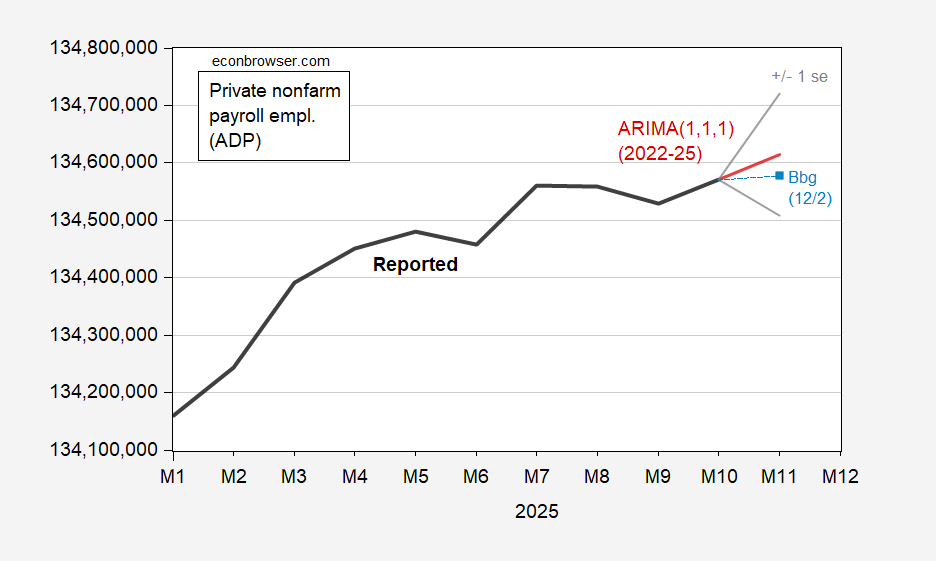
Menzie Chinn analyzes the ADP private nonfarm payroll data and compares it with Bloomberg's consensus and ARIMA forecasts.

A significant donation is made to create investment accounts for children, providing funds to support their financial future.

A major retailer is suing the government for potential refunds related to tariffs, contingent on a Supreme Court decision regarding import duties.

The post highlights various stories illustrating economic principles and trends, including labor market impacts of AI, consumer spending, and social norms in public spaces.

Nick HK discusses GiveDirectly's cash transfer research and its implications for understanding causality in complex economic systems.
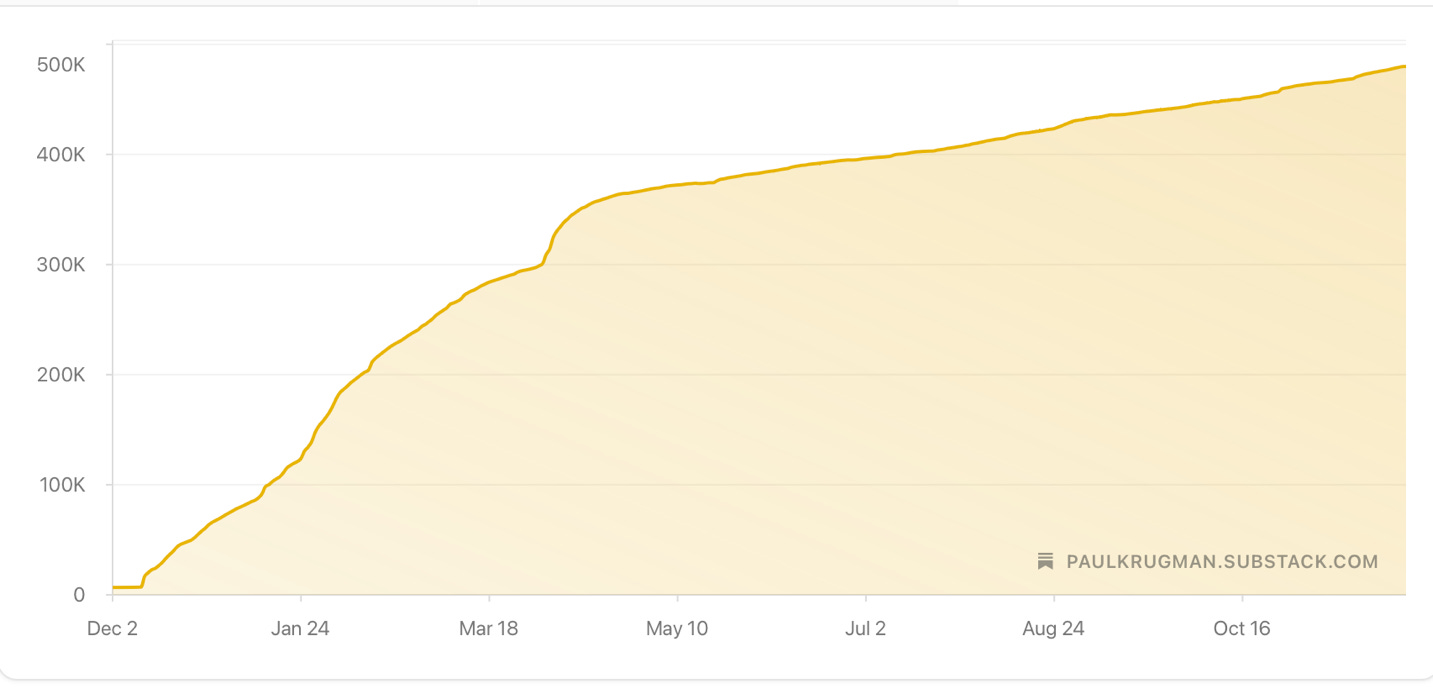
Paul Krugman reflects on the first year of his newsletter, discussing audience growth, production processes, and the collaborative effort with his wife, Robin Wells.

An argument that housing affordability issues stem from supply constraints, particularly zoning regulations, while acknowledging the role of demand and the need for policy changes to improve access.

The post analyzes October housing market data, highlighting sales trends, inventory levels, and price changes, while anticipating November's market performance.

David Folkenflik discusses Fox News facing a defamation lawsuit over false claims related to the 2020 presidential election.

A tribal radio station in Colorado struggles to survive amid recent federal funding cuts affecting numerous similar stations.
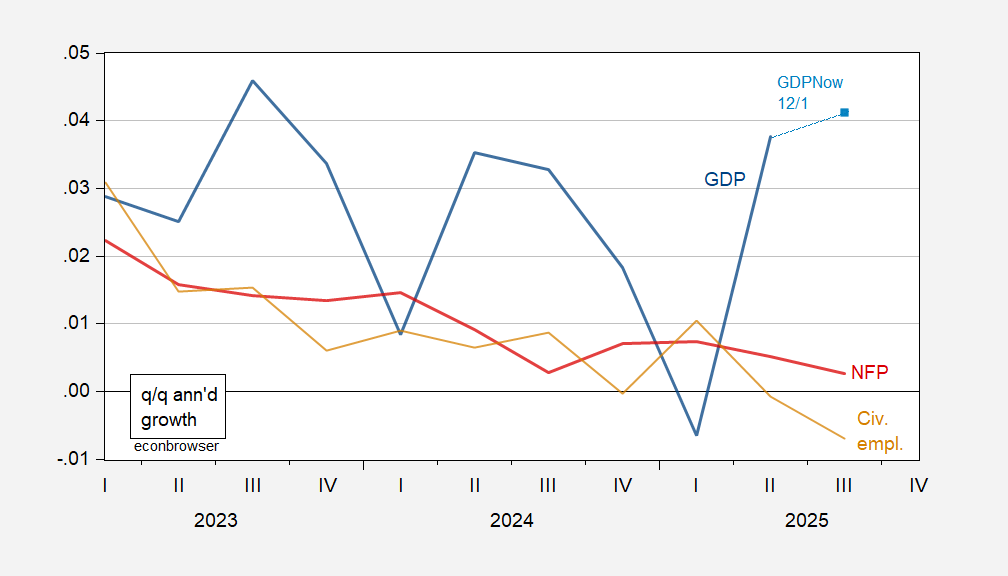
An argument that rising GDP alongside stagnant or declining employment raises questions about recession definitions and the timing of economic indicators.

An argument that Biden's renomination was a significant mistake due to his age-related decline and the Democrats' failure to hold a competitive primary process.
Menzie Chinn discusses the unsustainable trajectory of US debt and potential outcomes, including economic growth, interest rates, and the impact of immigration and AI.

John Ruwitch discusses TSMC's plans to expand operations beyond Taiwan amid changing political dynamics.

Jadrian Wooten explores how social norms, influenced by clothing choices like sweatpants, affect behavior and experiences during flights, highlighting their economic implications.

An argument that inflation-adjusted house prices have declined from their 2022 peak, emphasizing the importance of real price analysis in understanding housing market trends.

An argument that connects Trump's pardons of drug lords to his ties with the crypto/tech elite, highlighting contradictions in his approach to crime and governance.

Noah Smith discusses societal attitudes toward new technologies, particularly AI, contrasting American fears with more positive global perceptions and advocating for the benefits of technological advancement.

The post discusses recent trends in single-family housing inventory, noting a decline compared to previous years and seasonal patterns affecting availability.