
161. Cleaning out my closet — saying goodbye to 2025 links
Scott Cunningham reflects on his 2025 experiences, shares insights from various papers, and discusses personal interests and upcoming events as he transitions into 2026.
your daily dose of economic commentary
Scott Cunningham reflects on his 2025 experiences, shares insights from various papers, and discusses personal interests and upcoming events as he transitions into 2026.
The post explores the implications of AI on research productivity, emphasizing the balance between speed and quality in academic work, particularly in economics.
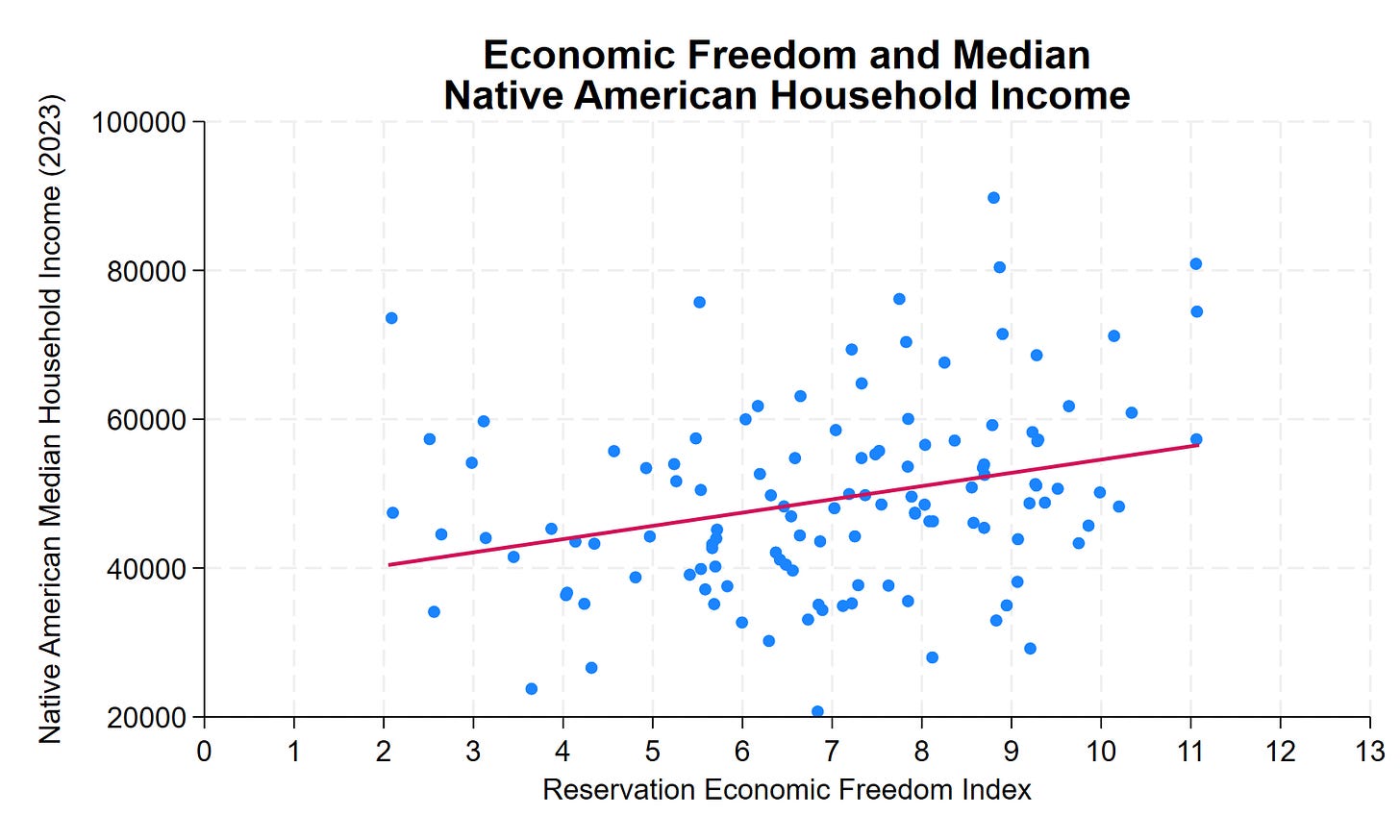
An argument that institutional quality significantly influences economic prosperity among US Indian reservations, with federal policies often hindering development and investment.
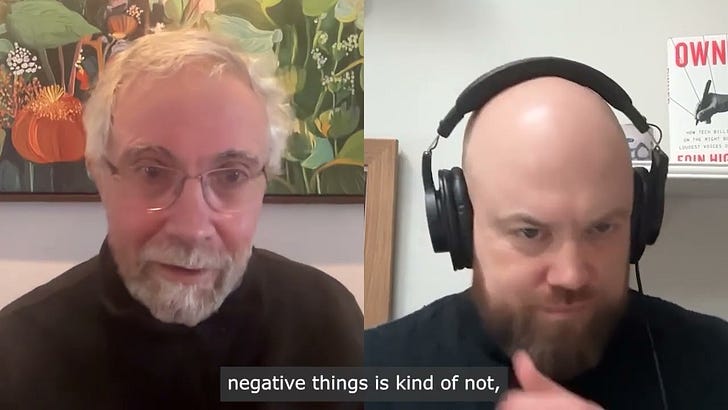
Paul Krugman interviews Eoin Higgins about his book on tech billionaires' influence on media and politics, focusing on figures like Matt Taibbi and Glenn Greenwald.

Bill McBride discusses key economic reports and indicators scheduled for the week of January 4, 2026, including employment and housing data.

Noah Smith discusses the effectiveness of America's chip export controls in maintaining a technological edge over China and their implications for national security.
Timothy Taylor discusses a meta-analysis revealing that economic inequality does not significantly affect subjective well-being or mental health, challenging common perceptions.
Timothy Taylor discusses how selective universities can enhance socioeconomic diversity by admitting students based on SAT scores rather than other factors favoring wealthier applicants.

Paul Krugman discusses New York's recovery, low crime rates, and challenges of affordability under the new mayor, highlighting the city's resilience and immigrant contributions.

The post discusses the current state of inflation-adjusted house prices, noting they are slightly below their 2022 peak and analyzing historical trends.

The post discusses the historical evolution of Cuba's political and economic systems, highlighting the impact of communism and recent calls for change among the populace.
Bill McBride discusses predictions for economic growth and the likelihood of a recession in 2026, emphasizing factors like fiscal policy and labor force growth.
Timothy Taylor reflects on self-reliance, destiny, and the balance between seeking happiness and recognizing opportunities that come naturally.

An argument that job growth may slow in 2026, with predictions of modest gains or potential job losses due to demographic factors and a stagnant labor market.
Scott Cunningham discusses using Claude Code to create devil's advocate agents for problem-solving in his empirical research process.

Bill McBride discusses predictions for the unemployment rate in December 2026, considering economic factors, labor market uncertainties, and potential fiscal policy impacts.
Tyler Cowen discusses potential taxation strategies in a future dominated by AI, focusing on wealth taxes, consumption taxes, and healthcare expenditures.

The post discusses the rise and subsequent crash of cryptocurrencies in 2025, influenced by political promises regarding crypto leadership.

Maria Aspan discusses Warren Buffett's retirement as CEO of Berkshire Hathaway and the transition to Greg Abel's leadership.

The post reflects on significant economic events of 2025, highlighting absurdities in policy and commentary, particularly regarding recession definitions and data collection issues.